
This post is also available in:
 Spanish
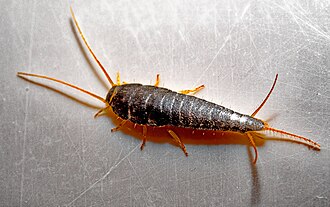
The silverfish (Lepisma saccharina) is a small, elongated, wingless insect with a shiny, silver-gray color, which gives it its name. It belongs to the order Zygentoma and is a cosmopolitan species found indoors, especially in dark, humid, and poorly ventilated places such as bathrooms, kitchens, or basements. It is characterized by its agility and fleeing from light, which makes direct observation difficult.
It feeds on materials rich in starch or polysaccharides, such as paper, cardboard, bookbinding glues, fabrics, and organic remains, which can cause damage to books, clothing, or archives. It has a long life cycle, with multiple molts throughout its existence, and reproduces through a spermatophore system without direct copulation. Its ability to produce cellulase allows it to digest cellulose without microbial assistance, a rarity in the animal kingdom.
Morphology of the Silverfish
The silverfish gets its common name from its silvery or metallic grayish coloration, which develops with age, and its fast, undulating movement, reminiscent of a fish swimming. Its body is elongated, flattened dorsoventrally, and measures between 1 and 2 centimeters in length. One of its most distinctive characteristics is the absence of wings, which differentiates it from many other household insects.
Its body is segmented and covered in small, shiny scales. The head has a pair of long, filiform antennae, sensitive to touch and odors, and small, separate compound eyes, although some species are blind. The posterior part of the abdomen is characterized by the presence of three long, thin appendages: a central caudal filament and two lateral cerci, which are important sensory structures. This primitive morphology reflects its long evolutionary history, often considered a “living fossil” among insects.
Life Cycle of the Silverfish
The silverfish undergoes ametabolous or gradual metamorphosis, which means that the young (nymphs) are very similar to adults in appearance, although smaller. The life cycle begins with the laying of eggs, which are oval, whitish, and deposited individually or in small groups in cracks, crevices, or under objects, often in damp and dark places.
The hatching of the nymphs occurs after a period that can vary from a few weeks to several months, depending on environmental conditions, especially temperature and humidity. The nymphs go through multiple molts (ecdysis) as they grow, shedding their exoskeleton several times. This molting process can occur over several years, and silverfish can live between 3 and 5 years, and even up to 8 in optimal conditions, which is a relatively long life for a household insect. Sexual maturity is reached after several molts, and adults continue to molt throughout their lives.
A curious fact often omitted: Silverfish perform an elaborate courtship ritual that involves movements of the antennae and body before mating.
Where Do Silverfish Live?
The silverfish is hygrophilous and photophobic, meaning they prefer humid and dark environments and avoid light. This explains why they are commonly found in areas such as:
- Bathrooms: under sinks, behind toilets, in showers and bathtubs.
- Kitchens: under sinks, behind appliances, in pantries.
- Basements and garages: especially if they are damp.
- Laundries: near washing machines and dryers.
- Warehouses and storage rooms: where moisture accumulates and there are organic materials.
- Cracks and crevices: in walls, baseboards, door and window frames.
- Inside books and stacks of paper: especially in humid environments.
Their ability to hide in small spaces and their mainly nocturnal activity means that their presence can go unnoticed for a long time until the population grows.
What Do Silverfish Eat?
Silverfish are omnivores with a preference for materials containing cellulose, starch, and sugars. Their diet includes:
- Paper: books, newspapers, magazines, wallpaper.
- Natural fabrics: cotton, linen, silk, rayon.
- Adhesives: in book bindings, stamps, photographs.
- Foods rich in starch: flour, cereals, bread, pasta.
- Sugar.
- Hair and dead skin.
- Mold and fungi.
This varied diet allows them to survive in diverse environments within the home. Their habit of scraping the surface of materials when feeding is what causes the characteristic damage.
A little-known fact: silverfish can survive for extended periods without food, although humidity remains essential for their survival.
What Damage Do Silverfish Cause?
Although they do not bite or transmit diseases to humans, silverfish can cause significant damage to valuable objects:
- Damage to books and documents: they gnaw on bindings, pages, and photographs, leaving irregular holes and yellowish stains.
- Damage to textiles: they can feed on the cellulose in cotton and linen, as well as silk and rayon, leaving holes and stains.
- Damage to wallpaper: they can detach the adhesive and damage the surface of the paper.
- Food contamination: Although to a lesser extent, they can contaminate stored food with their excrement and molts.
The extent of the damage depends on the size of the infestation and the time that has passed without being detected.
How to Prevent the Presence of Silverfish?
Prevention is the most effective strategy to avoid a silverfish infestation. Given their love for humidity and dark places, preventive measures focus on controlling these factors:
Avoid Humidity
- Improve ventilation: use fans in bathrooms and kitchens during and after using water. Open windows regularly to allow air circulation.
- Control water leaks: quickly repair any leaks in pipes, faucets, or toilets.
- Use dehumidifiers: in basements, garages, and other areas prone to humidity, a dehumidifier can reduce humidity levels.
- Dry clothes properly: make sure clothes are completely dry before storing them, especially in closets that may have poor ventilation.
Cover the Cracks
- Seal cracks and crevices: use silicone or caulk to seal cracks in walls, baseboards, door and window frames, where silverfish can hide and lay eggs.
- Check pipes: seal gaps around pipes that enter walls and floors.
An additional preventive strategy: Regularly vacuum the areas where silverfish are usually found, paying special attention to cracks and the edges of rooms. This can help eliminate eggs and adults.
How Can I Eliminate Silverfish from My House?
If you already have a silverfish infestation, there are several methods to eliminate them:
- Adhesive traps: place sticky traps in the areas where you have seen silverfish. These traps, similar to those used for cockroaches, can capture insects as they pass over them.
- Bait traps: there are specific traps for silverfish that contain an attractive bait. The insects enter the trap and are trapped or poisoned.
- Aerosol insecticides: residual aerosols can be applied to baseboards, cracks, and other hiding places. Carefully follow the manufacturer’s instructions and ventilate the area well after application.
- Powder insecticides (such as diatomaceous earth): diatomaceous earth powder is a natural insecticide that dehydrates insects. Sprinkle it in areas where silverfish transit, such as behind appliances and along baseboards. Take precautions when inhaling the powder.
- Home remedies:
- Borax and sugar: mix borax with powdered sugar in equal proportions and place it in infested areas. The sugar attracts the silverfish and the borax is toxic to them. Caution: Keep out of reach of children and pets.
- Boric acid: similar to borax, boric acid powder can be sprinkled in areas where silverfish hide. It is also toxic if ingested.
- Professional pest control: for severe or persistent infestations, it may be necessary to resort to a professional pest control service. Experts can identify the extent of the problem and apply more effective and safe treatments.
The key to eliminating silverfish is to persist with treatment and address the underlying causes of the infestation, mainly humidity. Combining elimination methods with long-term preventive measures is the most effective strategy to keep your home free of these discreet but annoying insects.
| Solution type | Method / Ingredients |
|---|---|
| Natural homemade | Tablespoon of such and such powder (salt, boric acid…), coffee with bay leaf, sugar/yeast traps |
| Commercial | Spray |
| Environmental prevention | Reduce humidity, ventilate, seal cracks, maintain cleanliness |
| In advanced cases | Consult a pest professional |