
Woodworm
PEST CONTROL EXPERTS
Eliminate Woodworm with Gimasur
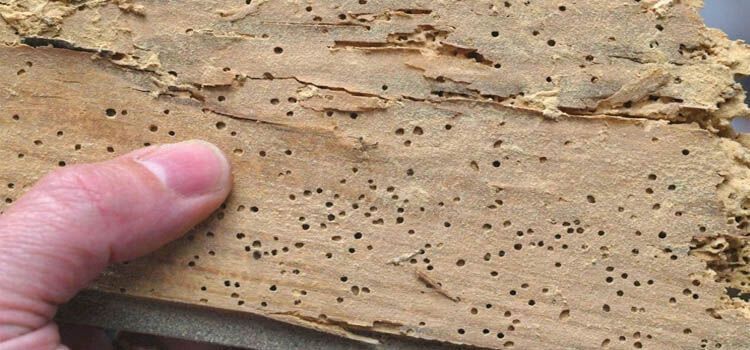
Woodworms, also known as moths or wood moths, can be identified when we detect holes in wooden furniture and sawdust in their deposits, so we may not detect the problem until it becomes visible, and in these cases, it is essential to act immediately to completely eliminate the woodworm.
As a curiosity, the woodworm problem is preferentially attracted to softer woods, so young or very old woods are usually ignored by this pest. Although there is always a possibility, which is why, at Gimasur, we always recommend consulting a professional when certain signs become present.
958 07 44 44
Problems with woodworm? We’ll solve them for you!
Woodworms are xylophagous insects that feed on the cellulose in wood and other materials that contain it (books, etc.). If not detected in time, the presence of these annoying bugs in wood can cause serious damage to both furniture and structural elements.
Signs that a woodworm infestation exists
All species leave signs of their presence, so we could easily detect the infestation with the following evidence:
- Exit holes, which depending on the species will be round or oval.
- Tunnels or galleries, which are sometimes visible if they are very superficial.
- Live specimens, small dark brown beetles, resting on walls or their cadavers.
- Noises in the wood.
- Larvae can be seen if the galleries are very superficial.
- Small accumulations of dust and sawdust.
- Old appearance of the affected wood.
- Cracks and defects in the corners or edges of beams, furniture, or floorboards.
Therefore, if you have furniture with small holes, dust underneath, and it reappears within minutes after cleaning, it could be woodworm. There are sprays that don’t give very good results, to be honest. This is because the larvae are lodged deeper in the wood.
The ideal solution is to call a company like Gimasur. We use a chemical fumigant gas treatment that completely eliminates the problem.
Types of woodworm in Andalusia
Woodworms are insects belonging to the beetle family (Order Coleoptera), called wood eaters or xylophages, from the Latin xylo (wood) and phage (eat). When it becomes an adult beetle, it lays its eggs in wooden objects. These larvae will feed on this wood for the rest of their lives, continuing their life cycle inside the furniture. These pests may lack visible signs for years, causing serious structural problems in the furniture. In Andalusia, we can find three types of woodworm: Anobiids, Lyctids, and Cerambycids.
It is essential to know each type to determine the most appropriate treatment, which is why one should always consult experienced professionals:
Anobiids or Common Woodworm (Anobium Punctatum):
- Length of 2.5-5 mm.
- Reddish-brown color.
- The head position faces downward, covered by the pronotum
- The exit of males generates round holes of 1-2 cm in diameter.
- Eggs hatch in the wood in 4-5 weeks.
- The complete cycle can last 2-3 years. Adults emerge between April and August.
- Attacks all types of wood but prefers conifers and hardwoods.
Cerambycids or Large Woodworm (Capricorn beetle or Hylotrupes Bajulus):
- Length of 10-20 mm.
- Brown or black color.
- Long antennae.
- Exit holes are oval, 3-7 mm, and the sawdust they generate is coarse.
- Eggs hatch in about 14 days.
- The life cycle can last 2-12 years.
- Adult emergence occurs between July and September.
- The damage from this species attacks carpentry woods and floorboards, preferring coniferous wood.
- It often causes irreversible damage.
Lyctids or Powderpost Beetles (Lyctus Brunneus and Lyctus Lineaeris):
- Larvae are whitish and curved.
- Adult length of 2-6 mm, narrow and elongated shape.
- Brown color.
- Circular exit holes with a diameter of 1-2 mm.
- Very fine sawdust.
- The life cycle can last 1 year.
- The appearance of adults occurs in March-April and October-November.
- They attack soft wood with a high moisture content (10% – 30%).
- Causes damage to parquet and plywood.
Differences between woodworm and termites
Do I have termites or woodworm? The most advisable thing is to consult a specialist like Gimasur, but despite this, a series of signs are reviewed below, which can be very useful for identifying the infestation.
- The sound produced by termites is not audible without using technology. On the other hand, the sound of woodworms, if they are large, can be easily heard.
- Woodworms usually reveal their damage with exit holes of adults. Subterranean termites do not make exit holes.
- There is a type of termite, the drywood termites (Kalotermes flavicollis) that make small holes through which they expel “fecal pellets“. To avoid confusing drywood termite holes with woodworm holes, one must look closely at the texture of the excrement. The tiny “fecal pellets” can vary in color, but their shape is very characteristic (similar to a tiny coffee bean). In contrast, woodworms usually leave very fine sawdust.
- Although termites look like whitish ants, they have six legs, unlike the woodworm larva which is only found inside the wood and has a “worm-like” shape.
The adult woodworm, when it leaves the wood, has a beetle-like shape. However, the “exit” to the outside of termites is usually by swarming, that is, they all come out at once and look more like a “winged ant” or alates.
Danger of a woodworm infestation
The main danger posed by woodworm, due to its feeding, is to all wooden furniture or structures. By developing its life cycle inside, feeding and creating internal galleries, acting for several years without being detected. Reaching its greatest severity, after a long period inside the structure or furniture, leading to collapse and breakdown of it. Apart from the material problem, woodworm does not present harm to human health.
Although the presence of a woodworm infestation can also lead to small bites, which are caused by the parasite, Scleroderma domestica, which usually coexist with woodworm. These bites can cause certain discomforts such as strong itching and discomfort.
Experts in treating woodworm infestations
Our expert wood technicians, with high experience, will first conduct a thorough inspection where they will determine the type of woodworm that has attacked the wood, if it is still active, and the severity of the problem. After detecting these factors, they will carefully evaluate which is the best treatment to perform.
We have very effective techniques and procedures, always using approved products by institutions. This allows us to perform treatments against woodworm infestations in any type of furniture, sculpture, or wooden structure. Depending on the type of woodworm, the severity of the problem, and the type of wood, we can perform injection treatment, spray treatment or a combination of both. Each treatment will have its warranty period, up to 3 years.
Contact us for Cockroach control!
If you have a woodworm problem and need help, call Gimasur Ambiental at 958 07 44 44.
We offer a guarantee for the woodworm treatment, ensuring you a good quality-price ratio.
Don’t hesitate to contact us, we will treat and analyze your case with individuality and personalization.
Request a quote with no obligation